First, rule out an emergency
If you smell rotten eggs or suspect escaping natural gas, do not continue troubleshooting. Do not use a cellphone, smoke, light a flame or operate electrical switches while inside. Leave the building, then call FortisBC’s 24-hour gas emergency line at 1-800-663-9911 or 911 from outside.
Carbon monoxide is different: it is invisible, odourless and cannot be reliably detected without an alarm. If a CO alarm sounds, or anyone has possible exposure symptoms such as headache, dizziness, nausea, confusion or unusual weakness, get everyone—including pets—outside and call 911. Seek medical help for symptoms and do not return until emergency responders or the utility say it is safe. A contractor booking form is not an emergency-response channel.
Check only the controls you normally use
When there are no gas or CO warning signs, look at the thermostat without removing it or touching its wiring. Confirm it is set to Heat, the requested temperature is above the displayed room temperature, and a schedule or temporary Hold setting is not changing the setpoint. If the thermostat has homeowner-replaceable batteries, follow its manual.
Write down what the display shows and whether anything changes. Avoid factory resets unless the thermostat manual specifically requires one. Do not repeatedly restart the furnace or reset a recurring lockout; that can erase useful information without resolving the cause.
- Mode is set to Heat
- Setpoint is above room temperature
- Schedule or Hold setting is understood
- Batteries are checked only as the manual permits
Look for a homeowner-accessible airflow problem
If the furnace manual identifies a filter that homeowners can safely access, follow its shutdown and inspection instructions. Check the filter size, orientation and visible condition. A heavily loaded filter can restrict airflow and contribute to poor heating or a protective shutdown. Use the size and type specified for the system; do not force in a higher-resistance filter simply because it has a higher filtration rating.
A filter change is not a diagnosis or safety inspection. If heating does not return normally, or the problem returns, arrange service. Do not open burner or electrical compartments, touch ignition components, bypass a door switch or safety control, adjust gas parts, alter venting or relight an unfamiliar appliance.
Record what the system is doing
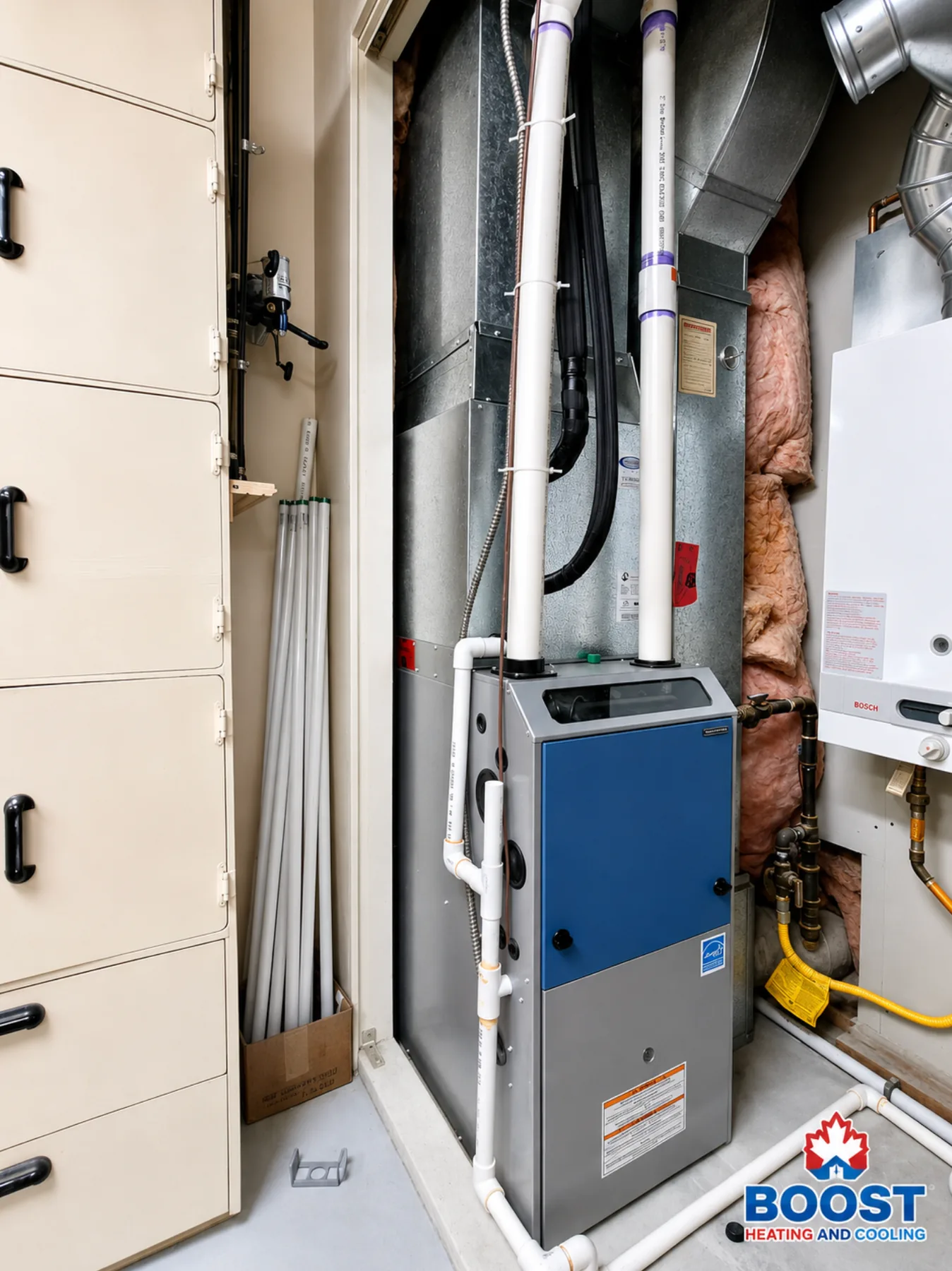
Note whether the furnace is silent, running without warm air or cycling on and off; any message visible on the normal thermostat or equipment display; unusual sounds or odours; when the problem began; and any recent furnace, thermostat, electrical or renovation work. Record the make and model only if the label is visible without removing a panel.
These observations do not prove which part has failed. A professional assessment can evaluate the operating sequence, airflow, ignition and combustion components, electrical controls, safety devices and venting as applicable. Gas-appliance servicing should be handled by qualified personnel.
- Your city, thermostat mode, setpoint and room temperature
- Whether the furnace is silent, cycling or blowing cool air
- Visible error message and when the issue began
- Recent work and readily visible make or model
BC industry watch: electric-heating bonus deadline
Confirmed current on October 19, 2026: BC Hydro lists a limited bonus of up to $1,000 for eligible air-source heat-pump projects replacing primary electric heating. The installation must be completed, invoiced and paid between August 1 and October 31, 2026, and the complete application is due November 30, 2026. Funding is limited and conditions apply.
This is an electric-heating replacement offer, not a natural-gas dual-fuel rebate. BC Hydro also requires qualifying work to be completed by a Home Performance Contractor Network member and excludes emergency replacement of broken electrical systems. Check the official rules and contractor eligibility before committing. This article does not state that Boost is HPCN-qualified or guarantee any rebate.
Start with emergency warning signs, then limit yourself to normal controls, manual-approved filter access and clear observations. Leave gas, combustion, electrical, venting and safety-control work to qualified personnel.